Mud patches and echoes: Why our clubs need homes, not just houses
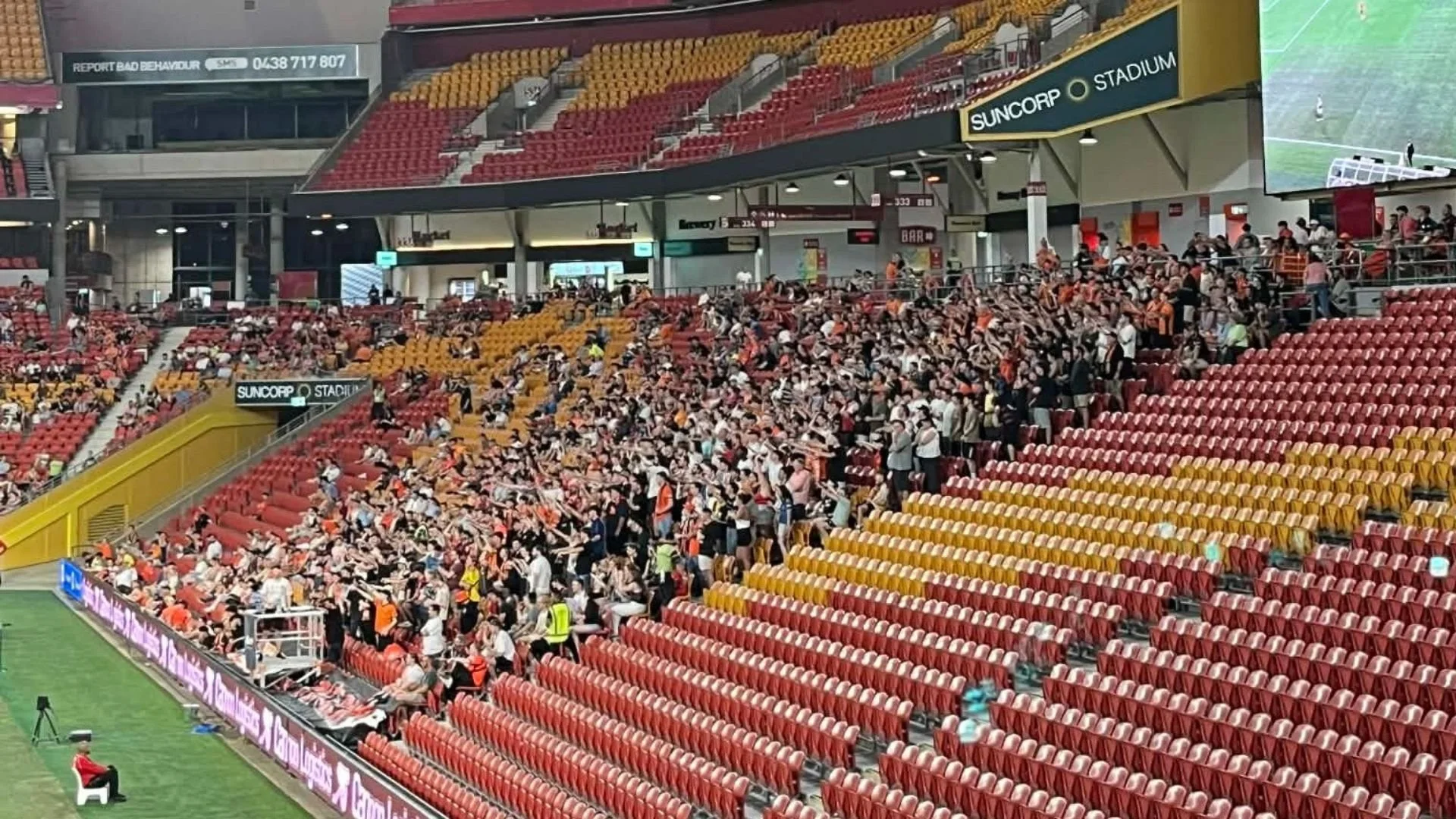
On Friday night, Australian football supporters tuned in hoping for an intriguing clash between a revitalised Brisbane Roar under new coach Michael Valkanis, and a surprisingly struggling Melbourne Victory. Instead, we were treated to a spectacle of a very different kind.
The surface at Suncorp Stadium was, frankly, an embarrassment. To call it a pitch would be generous; it looked more like mud and clay with a few token blades of grass fighting for survival.
Melbourne Victory coach Arthur Diles didn’t mince words, and his criticism was entirely justified.
When the overriding talking points of the post-match press conference are of the condition of the pitch rather than the match itself, we have failed.
But the "cow pat" surface is just the visible symptom of a much deeper, systemic illness that has plagued our game for decades.
The Cycle of Neglect
This isn't a new issue. We seem to be stuck in a cycle of neglect, apology, and repetition with no circuit breaker in sight.
The responsibility here is collective. Suncorp Stadium failed to deliver a workplace conducive to high standards of play. But beyond the ground staff, we must look at the Queensland Government, both past and present.
Football is the most played team sport in the state, eclipsing Rugby League, Cricket, and Australian Rules. Yet, it receives one of the lowest rates of funding per participant.
The maths doesn't add up, and the result is what we saw on Friday: a football club treated as a bastard child, not a valued tenant.
Our own leadership, including Football Australia, Football Queensland, the APL, and Brisbane Roar, are seemingly stuck between a rock and a hard place. I have no doubt they are frustrated, but frustration is not a strategy.
Football leaders must be stronger. We cannot continue to accept substandard delivery simply because we lack a viable alternative.
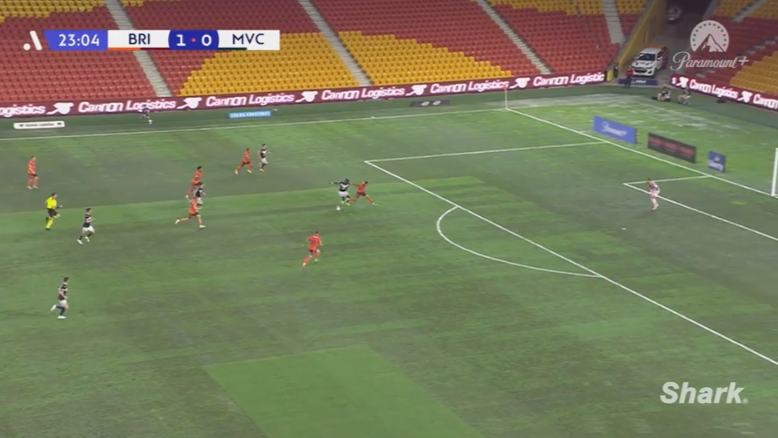
The Suncorp Stadium pitch as it looked on the Paramount+ Coverage
The Cavernous Reality
The issue isn’t just the grass; it’s the atmosphere. Suncorp Stadium is a magnificent venue for a State of Origin decider. For a regular-season A-League match, it's currently a cavern.
Brisbane Roar matches are becoming increasingly difficult to watch, not because of the football, but because of the optics. Let me be clear that this is no reflection on the supporters.
The 8,000-plus faithful who marched into Suncorp on Friday were magnificent, punching well above their weight to generate genuine atmosphere and noise.
Yet, despite their herculean efforts to create a true football spectacle, they are swallowed whole by over 40,000 empty seats. It creates a "soulless" visual that diminishes the product for viewers and players alike, undeserving of the fans who turn up week in, week out.
And for what’s worth this isn't just a Brisbane problem.

The Olympic Paradox
The most bitter pill to swallow is the looming 2032 Brisbane Olympics.
We are watching a bizarre scenario unfold where codes that aren’t even Olympic sports, specifically AFL and Rugby League, are positioned to benefit from legacy infrastructure upgrades. Meanwhile, Football, the world’s game and a marquee Olympic sport, looks set to be left behind once again.
We saw this "bait and switch" recently with the 2023 FIFA Women's World Cup. What started as a conversation about the funding of Women's Football quickly morphed into a generic push for "Women's Sport." (I’m sure we’re all eagerly waiting to see how football benefits from the AFLW Grand Final played over the weekend).
The "Rent-Seeker" v Joint Venture
Perhaps the most frustrating aspect of the current stadium crisis is the economic stupidity of it.
Currently, A-League clubs funnel millions of dollars in rent and hiring fees into the pockets of commercial stadium operators and government trusts. That money leaves the game, never to be seen again. It pays for shareholders, executive bonuses, and maintenance of assets that, as we saw on Friday, often fail to meet our basic needs.
Imagine a different model. A model where the stadium is not just a landlord, but a partner.
Outside of the utopia of every club owning and managing their own fit-for-purpose stadiums and facilities, we need to foster healthy, prosperous joint ventures between clubs, State Federations, and Football Australia. It makes infinitely more sense for a club to pay rent to a venue owned or managed by the local football community.
In this model, the "rent" isn't an expense; it's an investment. Every dollar paid by the professional tier is funnelled back into the local football economy, upgrading facilities, and developing a sense of collaboration and self-reliance for the local game.
We need to stop renting from landlords and start building equity in our own future.
Breaking the Cycle
For Queensland at least, the solution for Brisbane is staring us in the face: Perry Park.
It is widely recognised by the football community as the best feasible option for a true home of professional football in Brisbane, and the perfect candidate for a joint venture model.
But it needs funding, it needs upgrades, and it needs political will. But without it, we are destined to remain tenants in venues built for other codes, playing on surfaces destroyed by other events.
Across the board, football leaders must get cleverer, savvier, and significantly stronger on issues regarding infrastructure.
We cannot continue to just be grateful to have "a venue"; we must find infrastructure that respects the players, the supporters and most importantly the game.