Hey pollies, it's time to put your money where your scarf is!
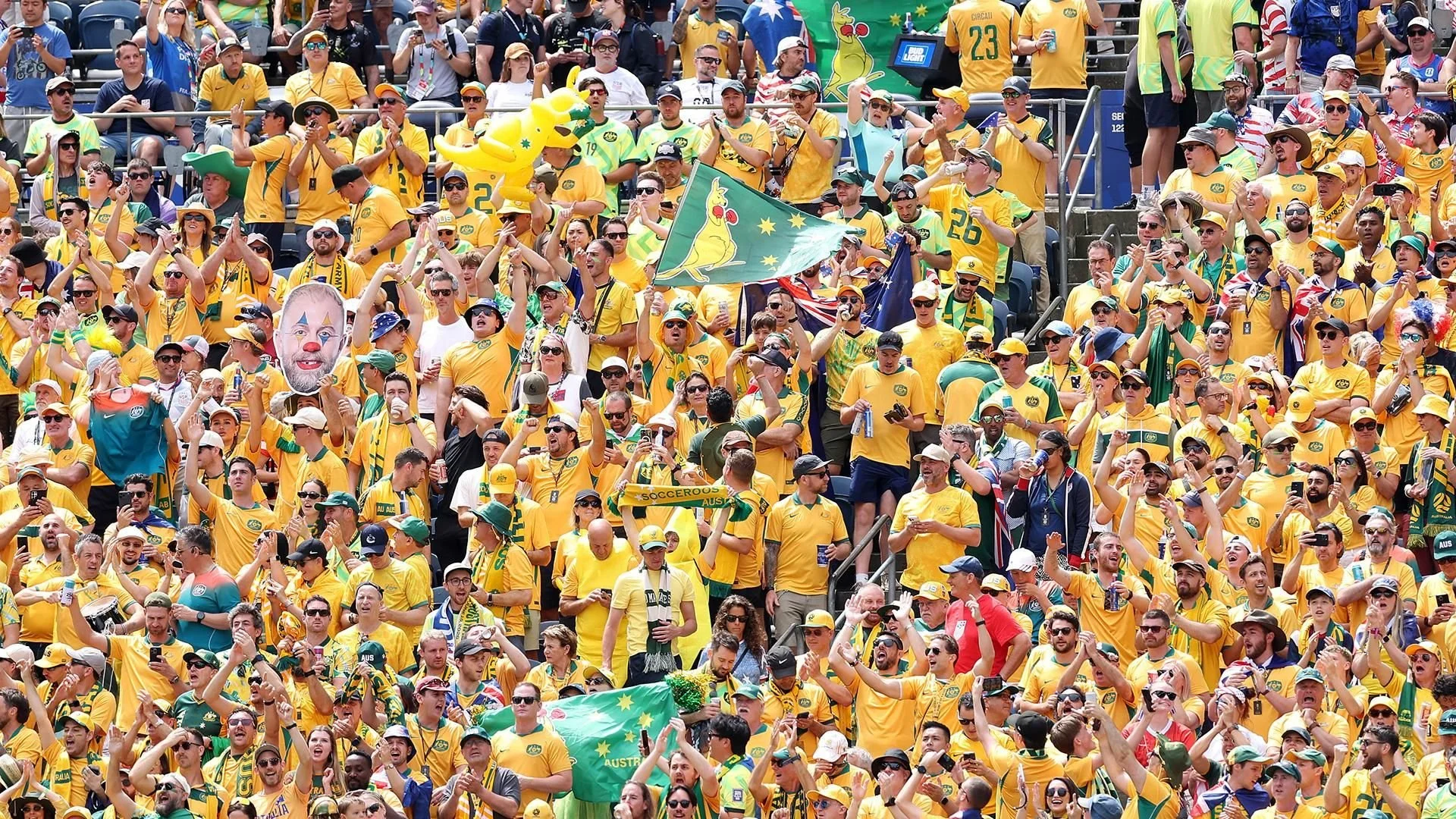
Credit: Socceroos
The World Cup is a magical time.
Right now we are witnessing some of the biggest viewership numbers and community interest in Australian football history. The scenes on the ground in North America have been extraordinary.
As jovial Australian fans endear themselves to the global community with our typical, Aussie cheekiness on full display, those supporting back home follow their social media feeds with slight sense of envy.
Nothing brings the world together quite like this game. The diplomatic power of football is immense, yet it remains an area that large portions of Australia and governments are yet to fully comprehend.
The simple reality is nothing unites this country like our national teams. They are a true mirror of modern Australia, bringing together players and supporters from all corners of the country, representing heritages from every corner of the globe.
As one of the highest participation sports and arguably one of the best supported at the varying levels of the game, one can draw the conclusion that football is a prominent contributor to positive health, social and economic outcomes across the country, however the funding fails to hit the same heights.
The sheer enormity of a World Cup is something that a large majority of the country, including many media outlets, either find hard to fathom or simply choose to ignore.
For all of its faults and issues, it is undeniably ‘the greatest show on earth’.
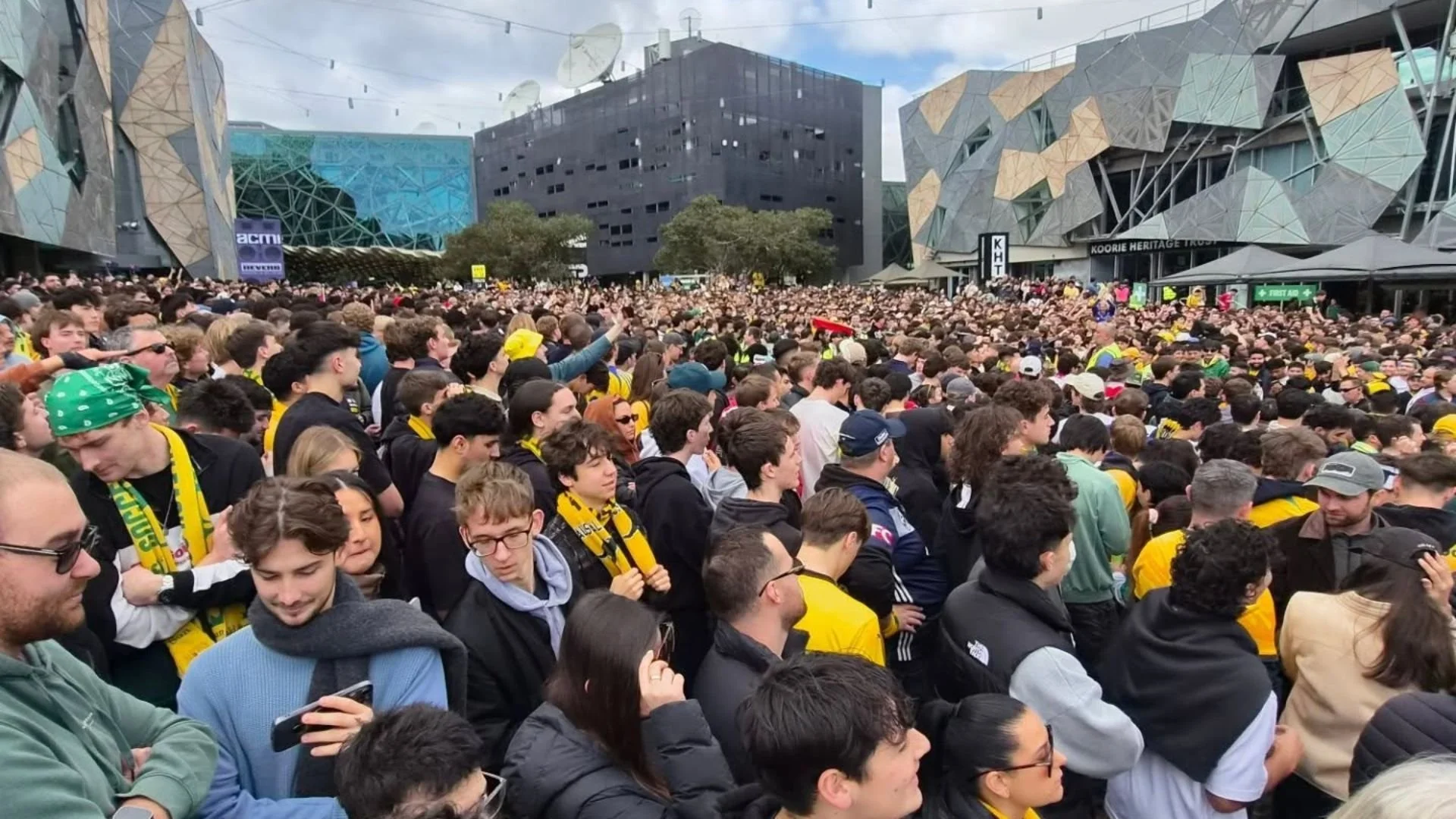
Socceroos supporters pack out Federation Square in Melbourne
Take the AFL and NRL Grand Finals, multiply that atmosphere by ten, have roughly 3 billion people tuning in for three and a half weeks and you might get somewhere close.
Naturally, while the World Cup is in progress, the politicians are paying attention.
You only need to walk through your social media feeds right now and the pattern is obvious.
Politicians on all sides are engaging their media managers to ensure they are front and centre. They are donning the green and gold scarf, appearing at local live sites, and catching the eye of every available media outlet.
Look, that is great. We welcome the enthusiasm.
But we have seen this script play out before. Once the big screens are packed away and the final piece of litter is collected, those green and gold scarves will go straight back into the closet.
Then it will likely be business as usual. Football will return to being one of the poorest funded sporting codes in Australia.
Don't get it twisted, some state governments have shown a tremendous amount of local support for the world game in recent times. While others have offered very little.
The cold reality is that football funding in this country comes from a dangerously low base. When you compound that systemic underfunding with rapidly increasing participation and surging operational costs, our community is left forever playing catchup.
The substance of this problem is deeply documented. Look at the numbers.
Football Australia’s Securing our Football Future national policy proposal lays bare a staggering $2.8 billion infrastructure gap across the country. Despite having 1.91 million active participants and 3,300 local clubs operating in just about every single postcode, the facilities are buckling.
The game has put its specific, data-backed demands on the table:
$1.56 billion from the Federal Government for a ten-year program to deliver basic, equitable, and inclusive change rooms.
$851 million from State and Territory Governments to fix the lighting facilities gap so local kids can actually train after dark.
$391 million over five years to address pitch drainage and weather resilience.
That is the actual cost of the game surviving. A generic, small-scale grant pool does not solve a multi-billion dollar football infrastructure deficit while grassroots players are actively being turned away due to a lack of safe pitches.
While we call out the institutional underfunding, the football community is also looking inward. There is plenty on the plate.
Football Australia is currently working to return its own financial figures to the black under the leadership of Martin Kugeler. Many within the game are firmly of the view that deep structural reform is the only viable path toward genuine, long-term sustainability.
Concurrently, the domestic professional tier is under severe strain. A-League clubs continue to struggle financially, causing more and more people to openly question the merits of the privately-owned franchise model, in addition to the fractured structure of the Australian football pyramid.
We cannot expect government funding to simply paper over systemic cracks. But we also cannot build a sustainable pyramid when our grassroots foundation is being systematically starved of basic resources.
To every politician currently using our national teams for a convenient public relations bump, the community is watching.
If you are willing to stand at a live site and claim the glory of the green and gold on television, you must be willing to stand up in the parliament and fund the local pitches where those players are made.
Enjoy the magic of the World Cup. But know that when the tournament ends, the fans will still be here, the participation numbers will still be climbing, and the facility crisis will still be waiting.
It is time to put your money where your scarf is.
It is time to realise the power of this game and the thousands of local communities who drive it.
It is time to fund football fairly.