Why ‘Sokkah Twitter’ has a right to be cheesed off at rival code promo
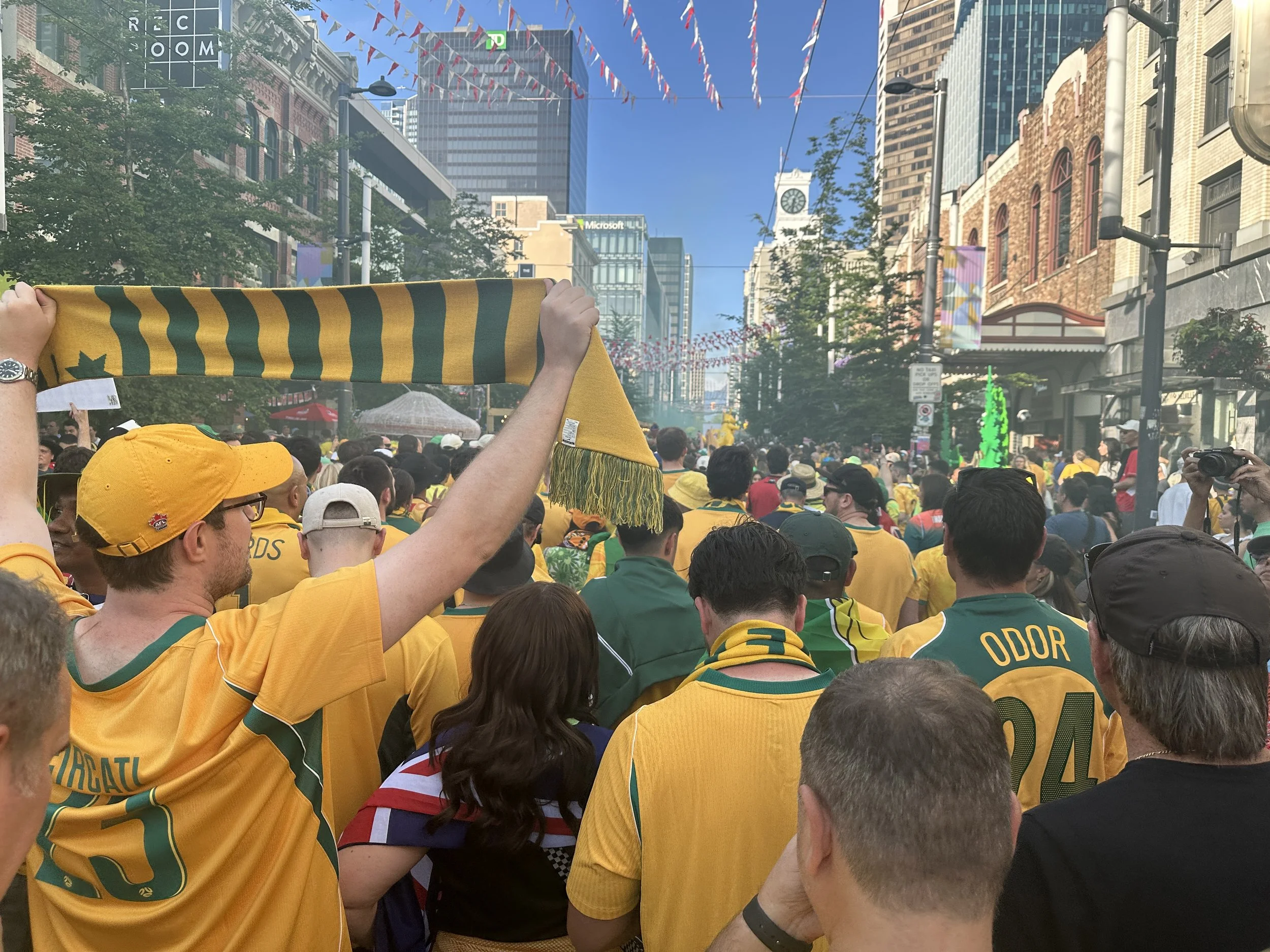
Credit: Texi Smith
Yesterday, Channel 7 dropped a promotional clip for their coverage of the 2026 Rugby League World Cup.
To hype up their broadcast, commercial producers needed raw passion, colour, and undeniable matchday energy.
So where did they look? They raided footage of active football supporters.
Within minutes, ‘SokkahTwitter’ exploded.
Pundits and supporters of rival codes quickly dismissed the outrage. They called us thin-skinned. They claimed it was just an innocent homage to a national "uniting moment." They told us to get over it.
They completely missed the mark.
To understand why football supporters across Australia are so cheesed off, you have to look at it through a historical lens.
This is not about one lazy video editor in a production suite. It sits on a decades-long timeline of deliberate institutional suppression and commercial protectionism.
Go back to June 1951.
The touring England FA side arrived at North Hobart Oval to play Tasmania. Before a ball was kicked, officials had to carry baskets of broken glass off the pitch.
Thousands of shards had been deliberately scattered across the turf overnight by anti-football saboteurs trying to stop the match from going ahead.
Then there was the corporate playbook from 2005.
During Federal Court proceedings, an internal email from Seven’s own C7 commercial lead was tendered into evidence. Written in November 2000, Seven's executive explicitly boasted:
"There is no credit that we have secured the soccer rights and suffocated the sport, much to the chagrin of its supporters (by giving AFL games preference)."
They admitted under oath to buying broadcast rights specifically to suffocate our game.
Cue the printing of thousands of bumper stickers wittily declaring that “Nobody screws soccer like Seven”—a direct play on the Channel 7 slogan of the day.
When Johnny Warren wrote Sheilas, Wogs and Poofters, he was not inventing a catchy title. He was documenting the actual language used by mainstream Australia, often cheered on by establishment media, to dismiss the migrant communities who transformed football in Australia.
For decades, football supporters in Australia have dealt with disparaging comments about their sport—comments historically rooted in racism, xenophobia, and deep-seated cultural prejudice.
But these are just a couple of examples of why football supporters feel the need to push back.
When media outlets attack football, they are not just attacking a sport on a screen.
They are attacking thousands of Australian communities in which football is the primary driver for their existence.
They are attacking the historical, suburban clubs, the grassroots volunteers, and the multi-generational families who found their voice and their identity on a football pitch when the rest of Australian society turned a cold shoulder.
Look at the double standard in reporting.
When an issue arises in rival codes—whether it involves off-field violence, anti-social behaviour, or crowd trouble—it is treated as an "isolated incident" by "a few bad apples."
The coverage is soft, forgiving, and quickly swept aside to protect broadcast rights value.
When a minor incident occurs at a football match, the media machine fires up the outrage cycle instantly.
Then, the exact same media outlets turn around and grab footage of those exact same supporters to sell a broadcast for a rival code.
Football supporters are right to call this out.
While the overt Sheilas, Wogs and Poofters slurs may have subsided, the protectionist mindset very much lingers in boardrooms where corporate partnerships ensure that football remains a game on the outer.
However, football is no longer a fringe activity for migrant communities.
Millions of Australians play, watch, coach, and support the game, in various forms, across every suburb and township, all year round.
We are a massive, diverse, passionate, and globally connected community. As the most played sport in Australia, with public interest rivalling most other codes, football remains deeply ingrained in the sporting and cultural fabric of this country—despite the best efforts and wishes of many.
Commercial networks cannot treat football supporters like a free stock footage library when they need cheap atmosphere, only to unfairly demonise the same communities when they need a ratings spike.
If you want our energy and passion on your screens, start by giving our game basic respect at your news desks.